
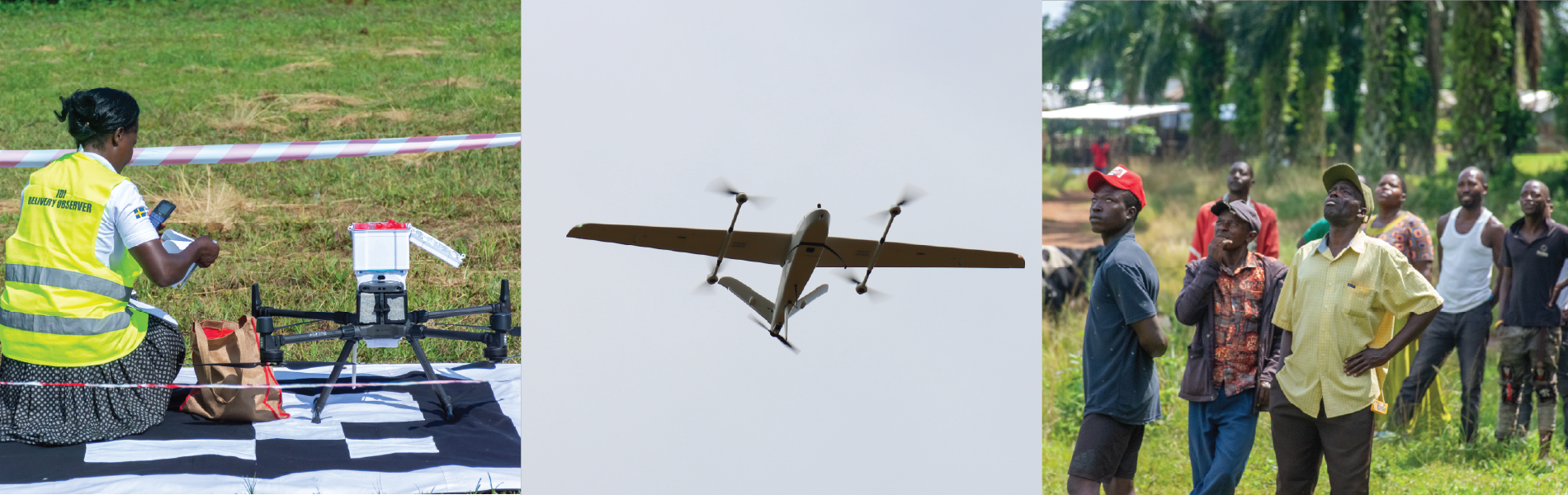
The MRC Kalangala Medical Drones Project
Overview
The Academy, with support from the Medical Research Council has been implementing the Kalangala Medical Drones Project, Uganda’s first medical drone initiative designed to address geographic barriers to healthcare in remote island communities. The project leverages drone technology to strengthen medical supply chains and improve access to essential health services in hard-to-reach areas of Kalangala District. By enabling faster and more reliable transportation of medicines and laboratory samples across dispersed islands, the initiative supports continuity of care for people living with HIV and strengthens service delivery at community and health facility levels.
The Challenge
Across many low- and middle-income countries, including Uganda, expanding access to antiretroviral therapy (ART) remains a priority in the fight against HIV. While health systems have made significant progress in decentralizing HIV services, several barriers continue to limit access for populations living in remote areas. Health facilities often face overstretched health healthworkers, overcrowded HIV clinics, and weak last-mile supply chains.
To address these challenges, the Ministry of Health has adopted community-based differentiated service delivery (DSD) models, which bring HIV services closer to patients. However, these models depend on efficient supply chains capable of reaching geographically isolated communities.
In island districts such as Kalangala, transportation is largely dependent on boats. This form of transport is often expensive, unreliable, and risky, particularly during bad weather conditions. These logistical barriers make it difficult to deliver medicines, transport laboratory samples, and maintain consistent medical supplies, ultimately affecting the continuity of care for people living with HIV.
The Kalangala Medical Drones Project uses drone technology to strengthen last-mile medical delivery systems in hard-to-reach island communities. Through regularly scheduled drone flights, the project enables fast, safe, and reliable transportation of
antiretroviral therapy and laboratory samples for testing. By reducing the time and risks associated with traditional water transport, drones provide a more efficient way to ensure that health facilities and communities receive critical health commodities when they need them.
Study design
The study is structured as a cluster randomised trial with mixed methods evaluation, comparing outcomes in communities receiving drone-delivered ART against those receiving standard of care.
Key elements of the design include:
- Randomisation: Communities/landing sites are assigned either to the drone intervention or to standard care.
- Clinical Outcomes: Comparison of virological suppression (proportion of people with undetectable HIV viral load), retention in care, and adherence after 12 months.
- Implementation Evaluation: Assessment of delivery reliability, acceptability to patients and community health workers, and system integration challenges.
- Health Economics: Evaluation of cost-effectiveness from both health system and patient perspectives.
- Environmental Impact: Evaluation of the carbon footprint of the drone intervention versus the standard of care (boats)